

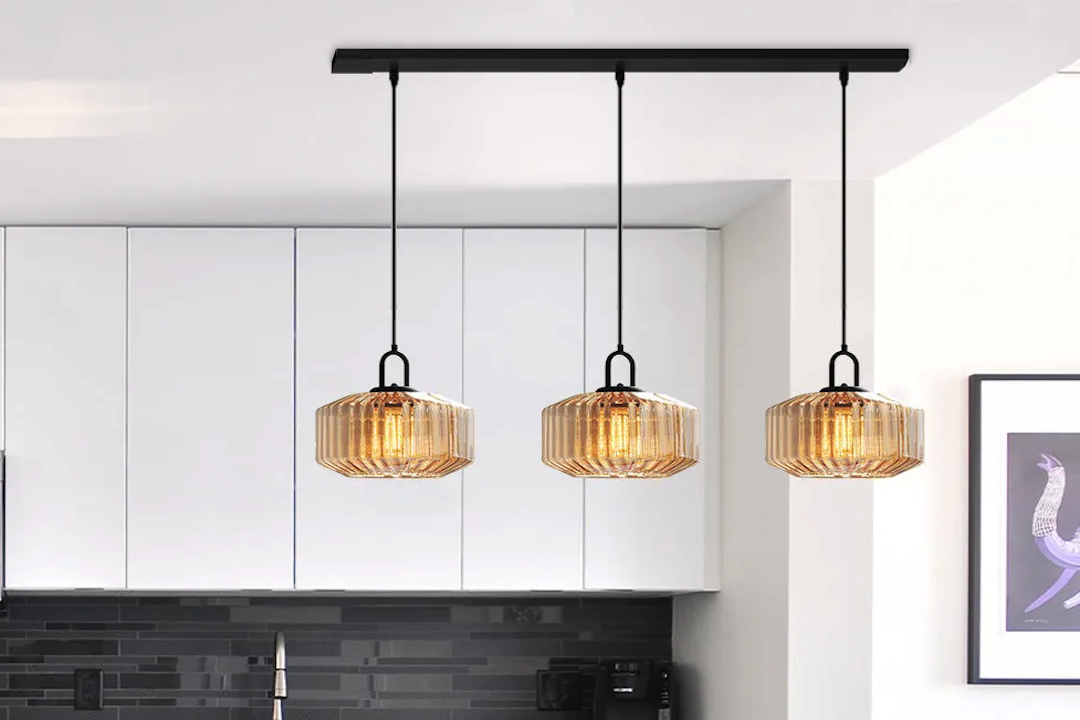
What’s the deal with ribbed glass pendant lights over kitchen islands?
If you’ve been browsing kitchen design ideas lately, you’ve probably seen them: those stylish pendant lights with ribbed glass shades hanging over kitchen islands. They’re a popular choice, and for good reason. They offer a nice blend of form and function, providing task lighting that’s also a visual anchor for your island. Think of them as functional art for your kitchen.
Why Ribbed Glass is Catching On
Ribbed glass brings a subtle texture and visual interest to a fixture without being overly ornate. The vertical or horizontal grooves, or “ribs,” refract light Simiglighting in a way that softens its intensity and creates a more diffused glow compared to clear glass. This makes them excellent for task lighting over an island where you need good illumination for prepping food, crafting, or even just enjoying a meal, but you don’t want harsh glare.
The Visual Impact: More Than Just Light
Ribbed glass pendant lights over a kitchen island aren’t just about illumination; they contribute significantly to the overall aesthetic of your kitchen. They can add a touch of vintage charm, modern sophistication, or even industrial edge, depending on the fixture’s design, material, and the way the light plays through the ribs.
Practical Considerations: Functionality Meets Style
While they look great, these lights are also designed to be practical. Their placement and design often consider the specific needs of a kitchen island.
Lighting Quality and Distribution
The ribbed texture of the glass is key to how these lights perform. It breaks up the light source, scattering it and reducing harsh shadows.
Task Lighting Needs
For cooking and food preparation, good, consistent lighting is essential. Ribbed glass pendants can provide this without being blinding. The diffusion means you get a broader area of light.
Ambient Lighting Contribution
Beyond task lighting, these pendants also contribute to the overall ambiance of the kitchen. The diffused glow can make the space feel warmer and more inviting.
Material and Durability
The materials used in these fixtures are generally chosen for both their appearance and their longevity in a kitchen environment.
Glass Types and Finishes
You’ll find ribbed glass in various shades, from clear to frosted, and sometimes even in colors. The ribs themselves can be fine or more pronounced, offering different textures.
Metal Finishes for Fixtures
The metal components of the pendant light are also important. Common finishes include brushed nickel, matte black, brass, and oil-rubbed bronze, which can complement different kitchen styles.
Design Flexibility: Adapting to Your Space
One of the strengths of ribbed glass pendant lights is their adaptability to a range of kitchen styles.
Modern and Minimalist Kitchens
In a modern kitchen, ribbed glass pendants can introduce a subtle textural element without overwhelming the clean lines.
Sleek Fixture Designs
Look for pendants with simple silhouettes and minimal metalwork to keep the focus on the glass.
Complementary Color Palettes
Matte black or brushed nickel fixtures often pair well with the cool and neutral tones common in modern kitchens. The ribbed glass provides a soft contrast.
Farmhouse and Traditional Kitchens
These lights can also bring a touch of old-world charm to more traditional or farmhouse-inspired kitchens.
Vintage-Inspired Styles
Consider pendants with antique brass or bronze finishes and perhaps a more rounded or bell-shaped glass shade.
Warm Wood Tones
The warm glow of ribbed glass can beautifully complement natural wood cabinetry and accents.
Industrial Kitchen Designs
Even industrial kitchens can benefit from the texture and diffused light offered by ribbed glass pendants.
Metal Accents and Raw Materials
Pendants with exposed metal elements and darker finishes, like matte black or charcoal, can fit right in.
Unique Industrial Textures
The ribbed glass adds a unique textural element that can break up the more utilitarian feel of industrial design.
Installation and Placement: Getting It Right
Where you hang your ribbed glass pendants matters. Proper placement ensures they’re both functional and aesthetically pleasing.
Height Recommendations
The height of the pendants is crucial for both lighting and clearance.
Above Counter Level
Generally, you want them high enough so they don’t obstruct views or conversations, but low enough to provide direct light on the island surface.
Clearance for Movement
Ensure there’s enough space to move around the island without bumping into the fixtures. A common guideline is 30-36 inches above the countertop.
Spacing and Sizing
The number and size of pendants should be proportionate to your island.
Matching Island Dimensions
For longer islands, you might opt for two or three pendants. Shorter islands might only need one larger fixture or two smaller ones.
Visual Balance
Consider the visual weight of the pendants in relation to the island and the overall kitchen. Too large or too many can overwhelm the space, while too small can look insignificant.
Common Concerns and Alternatives
While popular, ribbed glass pendants aren’t the only option for island lighting. It’s good to know what else is out there.
Dealing with Glare
While diffused, some ribbed glass can still produce glare depending on the bulb and light intensity.
Bulb Choice Matters
Opt for LED bulbs with a lower lumen output or a diffused lens to further reduce glare. Look for bulbs with a warm color temperature (around 2700K-3000K) for a softer effect.
Fixture Design Adjustments
Some pendants have hoods or diffusers built in to direct light downwards and minimize side glare.
When Ribbed Glass Isn’t the Right Fit
There might be situations where ribbed glass isn’t the ideal choice.
Need for Very Bright, Focused Light
If you need extremely bright, focused task lighting for intricate work, clear glass or directional spotlights might be more suitable.
Fear of Cleaning Dust and Grime
The ribs can collect dust more easily than smooth surfaces, requiring regular cleaning. If this is a major deterrent, consider smooth glass or other materials.
Alternative Lighting Styles
If ribbed glass just doesn’t appeal to your vision, explore other options.
Clear Glass Globes
These offer maximum light and a clean look, but can be glare-prone.
Metal Dome Pendants
These provide focused downward light and a strong industrial or modern feel.
Woven or Natural Material Shades
For a more bohemian or organic vibe, consider pendants made from rattan, bamboo, or fabric.
Track Lighting or Recessed Lights
For purely functional, unobtrusive lighting, these can be excellent, especially in very minimalist designs.
Popular Trends and Variations
The popularity of ribbed glass pendants has led to many interesting variations.
Different Ribbing Patterns
Beyond simple vertical ribs, you’ll find horizontal grooving, diamond patterns, and even more intricate textures pressed into the glass.
Vertical vs. Horizontal Ribs
Vertical ribs tend to draw the eye upwards, while horizontal ribs can make a space feel wider. The choice can subtly influence the room’s perception.
Textured and Frosted Finishes
Some ribbed glass is also frosted, which provides an even more diffused light and can add a softer, more opaque look. This can be particularly effective in reducing glare.
Color and Tinted Glass
While clear ribbed glass is common, you’ll also see it with subtle tints of amber, blue, or green, adding another layer of design possibility.
Amber Hues
Amber-tinted ribbed glass can create a very warm and inviting light, excellent for creating a cozy atmosphere.
Colored Accents
Subtle blues or greens can add a sophisticated pop of color without being overpowering, especially in modern or eclectic designs.
Industrial and Art Deco Influences
Many modern ribbed glass pendants draw inspiration from earlier design movements.
Art Deco Inspired Shapes
Think geometric patterns, stepped designs, and polished metal finishes that echo the glamour of the Art Deco era. A stepped base to the fixture or a more geometric glass shape can signal this influence.
Industrial Edge
Industrial versions often feature darker metal finishes, visible hardware, and perhaps a slightly more robust glass construction. The emphasis is on durability and utilitarian aesthetics.
Conclusion: A Versatile Choice for Modern Kitchens
Ribbed glass pendant lights have earned their place as a go-to choice for kitchen island centerpieces. They effectively balance the need for practical lighting with a desire for aesthetic appeal. The textured glass provides a unique way to diffuse light, creating a pleasant atmosphere while offering sufficient brightness for kitchen tasks. Their versatility means they can enhance a wide range of kitchen styles, from sleek modern spaces to more traditional or industrial settings. By considering the size, height, spacing, and complementing finishes, you can easily incorporate these eye-catching fixtures into your kitchen design to create both a functional workspace and a stylish focal point.