

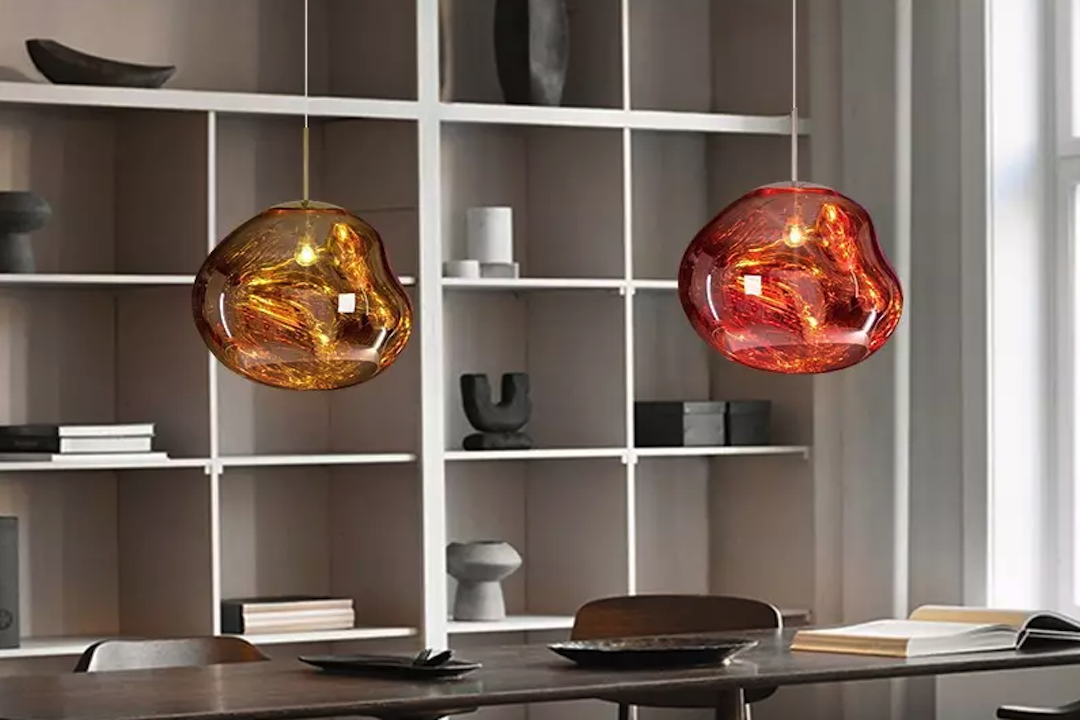
Ever wondered if a lamp could be more than just a light source? What if it could be a conversation starter, a work of art, or even challenge your perception of reality? Well, that’s exactly the vibe we’re talking about with the “Melting Glass Artistic Bar Counter Pendant Lamp.” This isn’t your grandma’s chandelier; it’s a piece of modern surrealism, designed to look like a glass object is literally melting and dripping, captured forever in that beautiful, fleeting state. It’s practical, providing light, but its primary function is to evoke curiosity and elevate the aesthetic of your space, especially over a bar or counter.
Modern surrealism, at its core, is about taking the ordinary and twisting it into something extraordinary, often unsettling, but always thought-provoking. It’s about breaking free from rational constraints and embracing the dreamlike, the illogical, and the subconscious. In lighting Homehubz, this often translates into fixtures that defy conventional forms, manipulate materials in unexpected ways, or create an illusion that challenges our perception.
Beyond the Light Bulb: A New Paradigm for Illumination
Historically, lighting has been functional first, decorative second. We’re used to fixtures that neatly encase a bulb, direct light, and perhaps offer a touch of elegance. But modern surrealist lighting, like our melting glass lamp, flips this script. Here, the form is the function, or at least, equally as important. The way the light interacts with the surreal elements becomes part of the art itself.
From Dali’s Clocks to Dripping Glass: A Journey Through Distortion
Think of Salvador Dali’s melting clocks. They take a familiar object and warp its physical properties to create a sense of fluidity and timelessness. Our melting glass lamp operates on a similar principle. It takes the solid, rigid nature of glass and presents it as a viscous, flowing substance. This distortion immediately grabs attention and invites a deeper look. It’s a playful defiance of gravity and material science, turning a simple lamp into a mini art installation.
The Psychology of Surprise: Why Surrealism Captivates Us
There’s a deep human fascination with the unexpected. When we encounter something that doesn’t quite fit our established worldview, our brains perk up. Surrealism taps into this by presenting anomalies. A melting glass lamp is surprising because glass shouldn’t melt in that way under normal circumstances. This element of surprise sparks curiosity and engagement, making the lamp not just functional but also intellectually stimulating. It’s a conversation piece engineered to get people talking.
Crafting the Illusion: Materials and Manufacturing Magic
How do you make glass look like it’s melting without actually melting it? This is where the magic of modern manufacturing and material science comes into play. It’s a blend of artistry and engineering that brings these abstract concepts to life.
The Alchemy of Glass: From Solid to Seemingly Fluid
The key to achieving that convincing “melting” effect lies in the careful manipulation of glass during its manufacturing process. It’s typically done in a few stages:
- Blowing and Shaping: High-quality borosilicate or soda-lime glass is carefully blown and then shaped while molten. Artisans use specialized tools and techniques to create the initial form, ensuring the “drips” look organic and natural, rather than stiff or artificial.
- Controlled Cooling: The cooling process is critical. Instead of cooling uniformly, specific areas are allowed to cool and solidify at different rates, or are subtly reheated and reshaped, to create the appearance of viscous flow. This requires immense skill and precision to avoid cracking or weakening the glass.
- Layering and Texture: Sometimes, multiple layers of glass, or glass with varying opacities, are used to enhance the depth and realism of the melting effect. Subtle textures, almost imperceptible to the eye, can also mimic the natural undulations of a liquid.
The Unsung Hero: Mounts, Wires, and LED Integration
While the glass is the star, the supporting cast plays a crucial role. The frame, the wiring, and the light source itself – typically LEDs – are all meticulously integrated to maintain the illusion and ensure safety and functionality.
- Minimalist Suspension: The beauty of a surrealist piece is often its perceived effortlessness. The suspension system for these lamps is often designed to be as discreet as possible, allowing the “melting” glass to appear as if it’s floating or suspended in mid-drip. Thin, high-strength cables or transparent acrylic rods are common choices.
- Hidden Power: Wires are carefully routed through the suspension or within the glass itself (where feasible and safe) to avoid breaking the ethereal aesthetic. The goal is for the light to seemingly emanate from the melting glass itself, not from an obvious bulb.
- LED Innovation: LEDs are a perfect match for modern surrealist lighting. Their small size, low heat emission, and longevity allow for creative placement and intricate designs that wouldn’t be possible with traditional incandescent bulbs. They also offer a wide range of color temperatures, allowing the lamp to create various moods – from warm and inviting to cool and ethereal.
Where Reality Drips Away: Ideal Spaces for the Melting Glass Lamp
This isn’t a lamp you just plop anywhere. Its unique artistic statement calls for spaces that can truly appreciate and amplify its surreal charm. Think less “utility room” and more “curated experience.”
The Bar Counter: A Stage for Surreal Sips
The name “Bar Counter Pendant Lamp” isn’t incidental. This lamp absolutely shines over a bar, whether it’s in a swanky restaurant, a chic hotel lobby, or your own home entertaining area.
- Conversation Catalyst: Picture this: you’re having a drink, and above you, glass appears to be perpetually melting. It’s an instant talking point, inviting guests to ponder its design, materials, and the very concept it embodies. It adds an element of intrigue and sophistication that a standard pendant just can’t deliver.
- Mood Creator: The soft, often diffused light passing through the “melting” glass can create a unique ambiance. It’s not just about illumination; it’s about crafting an atmosphere – one that’s luxurious, a little mysterious, and definitely memorable. It makes the drinks taste a little more special, the conversations a little more engaging.
- Artistic Focal Point: Over a bar, the lamp becomes the undisputed centerpiece. It draws the eye upwards, dictating the visual flow of the space and asserting its presence as a key design element.
Beyond the Bar: Unexpected Placements for Artful Illumination
While perfectly suited for a bar, this lamp can transcend its namesake and elevate other areas that could use a touch of unexpected artistry.
- Kitchen Islands with Personality: If your kitchen island is more than just a prep space – perhaps it’s where you gather for coffee, quick meals, or casual chats – a melting glass lamp can infuse it with artistic flair. It elevates the functional heart of your home into an exhibition space.
- Entryways that Impress: Imagine stepping into a home and being greeted by such a unique light fixture. It sets an immediate tone – that this is a space where design is valued, and the ordinary is eschewed. It’s a powerful first impression.
- Boutique Hotels and Restaurants: For commercial spaces aiming for a distinctive identity, these lamps are a game-changer. They offer a branding opportunity, signaling an establishment that values creativity, modernity, and a unique guest experience. They become part of the hotel’s “story.”
- Creative Office Spaces: For modern offices that want to inspire innovation and out-of-the-box thinking, such a lamp can be a subtle yet impactful addition. It breaks the monotony of traditional office lighting and adds an artistic touch to collaborative areas or reception desks.
The Design Dialogue: Integrating Surrealism into Your Decor
So, you’re intrigued. You love the idea of a melting glass lamp. But how do you make it work with your existing decor without it looking like a quirky anomaly? It’s all about thoughtful integration.
Striking a Balance: Contemporary vs. Eclectic Harmony
The key is to understand the lamp’s inherent artistic statement. It’s bold. It speaks volumes. Therefore, the surrounding decor should either complement its contemporary edge or provide an eclectic backdrop that allows it to stand out without clashing.
- Sleek and Modern: In a minimalist or contemporary setting, the lamp serves as a dramatic focal point. Its clean lines (despite the “melting”) and modern materials will blend seamlessly with a sleek aesthetic, adding an unexpected twist to an otherwise refined space. Think polished concrete, neutral palettes, and intentional pops of color.
- Artistically Eclectic: If your style leans more towards eclectic, the melting glass lamp can find a home among other unique pieces. The trick here is to ensure all your decor elements have a story or a distinct personality, creating a curated collection rather than a random assortment. This allows the lamp to be one of many fascinating objects.
Color and Contrast: Making the Glass Shine
The color of the glass, whether clear, subtly tinted, or even opaque, will influence its impact. Consider how it interacts with the wall colors and other materials in the room.
- Crystal Clear Clarity: Clear “melting” glass allows the light to pass through directly, creating mesmerizing distortions and reflections. It’s versatile and works well in almost any color scheme, acting as a chameleon that adapts to its surroundings.
- Subtle Tints: If the glass has a subtle amber, grey, or blue tint, it will cast a diffused, colored light, influencing the mood of the space. Consider if this tint complements or clashes with your existing color palette. A warm amber, for instance, can enhance an inviting, cozy atmosphere, while a cool blue might suit a more serene or minimalist space.
- Contrasting Backgrounds: A light-colored lamp will pop against a darker wall, making it a dramatic focal point. Conversely, a darker-tinted lamp might offer a more subdued yet equally artistic statement against a light wall.
Sizing Up the Surreal: Proportion and Impact
Like any design element, proportion matters. A tiny melting glass lamp in a vast hall might get lost, while an oversized one in a small nook could overwhelm the space.
- Overhead Grandeur: For a bar or island, consider the length and width of the counter. A single, large melting glass pendant can make a grand statement, or a series of smaller ones, strategically spaced, can create a continuous “river of melt” effect.
- Ceiling Height Considerations: Pay attention to your ceiling height. You want the lamp to be at a height where its artistic details can be appreciated without being a head hazard. Typically, over a counter, the bottom of the lamp should be about 30-36 inches above the surface.
Beyond the Aesthetics: Practicalities and Performance
While the “Melting Glass Artistic Bar Counter Pendant Lamp” is undeniably a piece of art, it’s also a functional light fixture. Understanding its practical aspects is crucial for a happy, illuminated experience.
Lumens and Ambiance: The Right Light for the Right Mood
The amount of light emitted (lumens) and its color temperature are key considerations.
- Ambient Glow: For a bar or dining area, intense, direct light isn’t usually the goal. These lamps are often designed to provide an ambient, diffused glow that enhances mood rather than illuminating tasks. Look for lumens in the 600-1000 range for a single pendant over a small area.
- Color Temperature (Kelvin): The “warmth” or “coolness” of the light (measured in Kelvin, K) dramatically affects the atmosphere.
- Warm White (2700K-3000K): Creates a cozy, inviting, and intimate atmosphere, perfect for a relaxed bar or dining area. This is often preferred for showcasing the textures and warmth of the melting glass.
- Neutral White (3500K-4000K): A good balance, suitable for spaces where you need a bit more clarity but still want a welcoming feel.
- Cool White (5000K+): Brighter and more energetic, generally not ideal for this type of artistic fixture unless a very specific, modern, almost gallery-like feel is desired.
- Dimming Capabilities: A dimmable lamp is highly recommended. It allows you to adjust the light intensity to suit different times of day, different events, or simply varying moods. This flexibility maximizes the lamp’s utility and aesthetic impact.
Maintenance and Longevity: Keeping the Illusion Alive
Glass, while beautiful, requires some care. Fortunately, modern glass fixtures are built to last.
- Dusting and Cleaning: Regular, gentle dusting with a soft, microfiber cloth is usually sufficient to keep the lamp looking pristine. For fingerprints or smudges, a glass cleaner applied to a cloth (never directly onto the lamp) can be used. Avoid abrasive cleaners or harsh chemicals, which can damage the glass finish.
- LED Lifespan: One of the major advantages of LED lighting is its incredible longevity. LEDs typically last tens of thousands of hours, meaning you won’t be changing bulbs frequently, which is a significant practical benefit, especially for fixtures that might be intricate or difficult to access.
- Installation Considerations: Due to the artistic and sometimes delicate nature of these fixtures, professional installation is strongly recommended. This ensures safety, proper wiring, and correct alignment, allowing you to fully enjoy the lamp without worrying about faulty setup.
The “Melting Glass Artistic Bar Counter Pendant Lamp” is a statement. It’s more than just a source of light; it’s a piece of modern art that challenges perception, sparks conversation, and elevates any space it inhabits. Its blend of surreal design, expert craftsmanship, and practical illumination makes it a truly distinctive and memorable addition to contemporary interiors.